

hydrogen
value chain.
⬤ HYDROGEN
SEDC Energy’s clean, renewable hydrogen project utilises state-of-the-art technologies to ensure environmentally friendly production. This aligned with Sarawak’s objective to be at the forefront of the hydrogen economy globally while addressing Net Zero’s goal by 2050.
⬤ WHAT IS H2
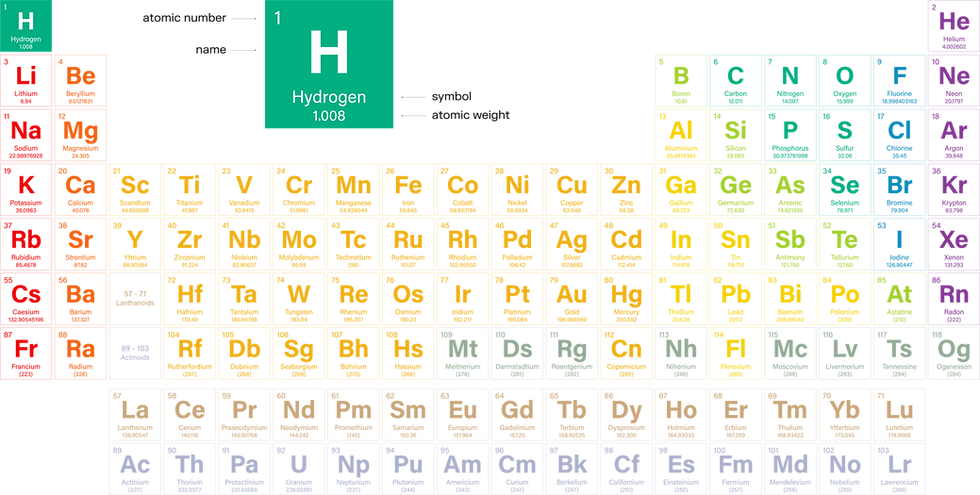
Hydrogen is the first element in the periodic table and the most abundant in the universe. When the word 'hydrogen' is used in the energy sector, it refers to a simple molecule composed of two hydrogen atoms: H2.

⬤ TYPES OF H2
Molecular hydrogen is categorised as grey, blue, or green hydrogen, depending on the energy source and the manufacturing process. Although natural gas, coal, and biomass can all be used to produce hydrogen, these energy sources also release greenhouse gases into the atmosphere. Another method for producing hydrogen is electrolysis, which separates water into hydrogen and oxygen.

⬤ GREEN H2
Green hydrogen uses renewable energy sources that don’t emit greenhouse gases, including hydropower, wind and solar. The electrolysis process, which separates water (H2O) into hydrogen (H2) and oxygen (O), is used to create green hydrogen.
Sarawak is well-positioned to produce green hydrogen through electrolysis due to its ample water resources and hydropower potential. This aligned with the plan to become a clean hydrogen center and export green hydrogen by 2030.

⬤ H2 VALUE CHAIN
electrolysis energises hydrogen power
Hydrogen is produced through the electrolysis process by using electricity to split water (H₂O) into hydrogen (H₂) and oxygen (O).
hydrogen storage and distribution.
Then, it is stored in specialised facilities for distribution to various sectors including transportation, industrial applications and power production.
logistic, mobility and industrial applications.
After the hydrogen is distributed, the fuel cells convert hydrogen into electricity to power electric motors. Hydrogen fuel cells power vehicles and generate energy for industrial sectors, multifuel stations, airports and ship docks.

⬤ SARAWAK H2 HUB
Sarawak Hydrogen Hub is a flagship initiative led by SEDC Energy (SEDCE), the energy arm of Sarawak Economic Development Corporation, to position Sarawak as a regional leader in clean hydrogen production and export. It supports the State’s ambition to build a hydrogen economy that is sustainable, competitive, and future-ready, while driving both upstream and downstream development.